Nālandā University, Rajgir, Bihar [email protected]

Centre for Southeast Asian Studies

Bridging ancient connections, shaping modern discourses

Reviving Nalanda's legacy as an intellectual crossroads linking India, ASEAN, and East Asia through interdisciplinary scholarship.

A significant dimension of this shared intellectual history is the connection between the Buddhist world of Southeast Asia and major centres of learning in India, particularly Nalanda. Nalanda emerged as a major centre of Buddhist learning and became part of wider trans-Asian networks through which monks, scholars, texts, and ideas circulated. Buddhist philosophy, logic, epistemology, monastic traditions, and Sanskrit and Pāli learning travelled through these networks and were subsequently translated, interpreted, and adapted in different Asian societies. Southeast Asia was an active participant in these processes, with longstanding Buddhist and cultural exchanges involving Myanmar, Thailand, Cambodia, Vietnam, and the Malay-Indonesian world. Nalanda's significance is therefore best understood within a broader history of trans-Asian intellectual and mobility of the traders, rather than as a single institutional relationship. These networks also facilitated the circulation of manuscripts, scripts, architectural forms, iconography, ritual practices, and other Indic cultural traditions.

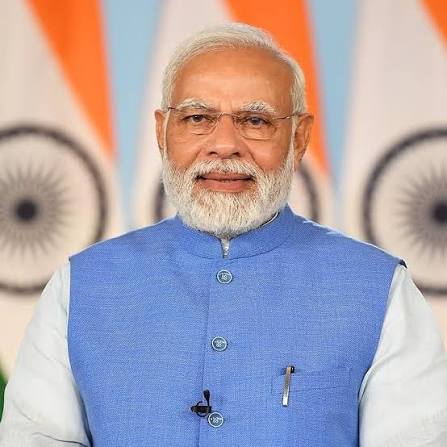
Hon’ble Prime Minister Shri Narendra Modi
PM Modi Announces Centre for Southeast Asian Studies at Nālandā University

Announcement

PM Modi Announces Centre for Southeast Asian Studies at Nālandā University

26 October 2025 | The 22nd ASEAN–India Summit was held on 26 October 2025, with Hon’ble Prime Minister Shri Narendra Modi participating virtually alongside ASEAN leaders. This marked the Prime Minister’s 12th participation in the ASEAN–India Summit.

In a landmark announcement highlighting Nalanda University’s global academic standing, the Hon’ble Prime Minister announced the establishment of a Centre for Southeast Asian Studies at Nalanda University. The announcement, made during the Summit, is a significant step under India’s Act East Policy, reaffirming Nalanda’s historic role as a bridge of knowledge across Asia.

Proposed to be located at the Rajgir campus, the Centre will focus on regional studies, policy dialogue, cultural exchange, and collaborative research with ASEAN nations.

India and Southeast Asia: An Introduction

The Centre for Southeast Asian Studies (CSEAS) brings together historians, political scientists, strategists, environmentalists, marine biologists, linguists, scholars of religion, anthropologists, and Culture Studies scholars to examine the historical and contemporary relationships between India and Southeast Asia. Its interdisciplinary approach recognises that these relationships have evolved not only through diplomacy and commerce, but also through the movement of religions, languages, texts, knowledge systems, artistic traditions, people, and cultural practices across the Bay of Bengal and the wider Indian Ocean.

However, the CSEAS provides an important foundation for examining the changing relationship between India and Southeast Asia in the contemporary scenario. The same maritime and intellectual spaces that historically enabled the movement of people and ideas have acquired renewed significance in an era defined by ASEAN–India relations, Indo-Pacific connectivity, maritime cooperation, migration, cultural diplomacy, heritage preservation, digital transformation, economic integration, and emerging regional security challenges. CSEAS therefore places historical and civilisational scholarship in dialogue with contemporary area studies and policy research, allowing the past to illuminate the evolving strategic, economic, cultural, and social landscape of the region.

Following the announcement made by the Hon'ble Prime Minister Shri Narendra Modi at the 22nd ASEAN–India Summit, the Centre for Southeast Asian Studies was inaugurated on 31 March 2026 by Shri P. Kumaran, Secretary (East), Ministry of External Affairs, Government of India. In this context, the CSEAS contributes to the broader knowledge architecture supporting the ASEAN–India Strategic Partnership, while maintaining an independent and interdisciplinary scholarly engagement with the region.

Its research spans Buddhism and trans-Asian intellectual networks, Nalanda and Asian knowledge exchange, Sanskrit and Pāli traditions, maritime and cultural interactions, archaeology and heritage, Indian diaspora and mobility, religion and society, and contemporary ASEAN–India and Indo-Pacific affairs. This breadth enables CSEAS to study Southeast Asia simultaneously as a historical zone of civilisational interaction and as a dynamic region at the centre of contemporary Asian transformations.

The CSEAS welcomes scholars, students, visiting fellows, policymakers, and the wider public to participate in research and dialogue with multidisciplinarity. Through this interdisciplinary approach, CSEAS seeks to generate evidence-based research that can inform policy and public discourse on ASEAN–India relations, regional connectivity, maritime cooperation, cultural diplomacy, heritage, migration, economic engagement, and the evolving strategic and socio-cultural landscape of the Indo-Pacific.

A living connection to Nālandā's intellectual history

CSEAS brings together historians, political scientists, linguists and Culture Studies scholars to study the deep and continuing relationships between India and Southeast Asia.

The Centre was inaugurated on 31 March 2026 by MEA Secretary (East) Shri P. Kumaran, following the Prime Minister's announcement at the 22nd ASEAN–India Summit. Serving as a knowledge partner to the ASEAN–India Strategic Partnership, it advances policy research, civilisational connectivity and academic collaboration across interdisciplinary research clusters.

We welcome scholars, students, visiting fellows and the public into that conversation.

Vision

A long-term intellectual partnership between India and Southeast Asia, for generations to come.

Mission

Policy-oriented research and cross-cultural scholarship that goes beyond diplomatic and economic dialogue.

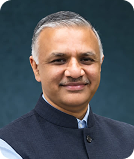
Prof. Sachin Chaturvedi, Vice Chancellor, Nālandā University

Vice Chancellor's Message

Almost a century ago from now, in 1927, Rabindranath Tagore travelled through Malaya, Sumatra, Java and Bali. Of what he saw, he wrote, “Everywhere I could see India, yet I could not recognise it.” India is there in the temples, the epics and the languages. The people who received it also made it their own. Understanding that exchange takes patience and good sources.

Prof. Sachin ChaturvediVice Chancellor, Nālandā University

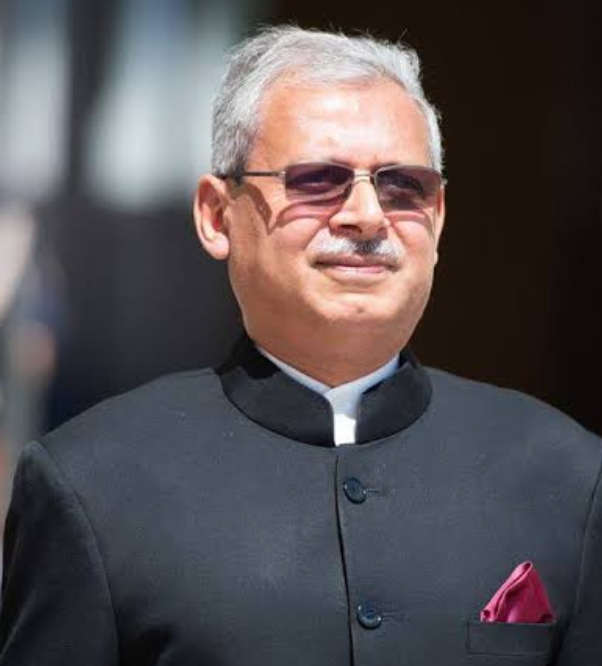
Ambassador Jaideep Mazumdar

Director's Message

Welcome to the Centre for Southeast Asian Studies at Nalanda University. Southeast Asia is a region of remarkable diversity, civilisational richness and contemporary significance. Its societies have been connected for centuries with India through trade, knowledge exchange, religion, culture and the movement of people.

Ambassador Jaideep MazumdarDirector, CSEAS

Prof. Sachin Chaturvedi, Vice Chancellor, Nālandā University

Message

Vice Chancellor's Message

Almost a century ago from now, in 1927, Rabindranath Tagore travelled through Malaya, Sumatra, Java and Bali. Of what he saw, he wrote, “Everywhere I could see India, yet I could not recognise it.” India is there in the temples, the epics and the languages. The people who received it also made it their own. Understanding that exchange takes patience and good sources.

Prime Minister Narendra Modi announced the Centre at the 22nd ASEAN-India Summit in October 2025. He said then, “The 21st century is our century, the century of India and ASEAN.” The Centre works through a few research clusters, covering climate, maritime studies, trade, culture, literature, digital cooperation and international relations.

Nalanda Sodha Vihāra brings the University’s research centres together under one roof. The Centre will draw on that company and add a regional focus to NSV’s wider work. The Centre’s work rests on two foundations. The first is trade, investment, technology and finance. Supply chains, capital flows, digital payments and infrastructure financing link India and ASEAN economies more closely each year. The Centre can undertake careful comparative research in this area. The second is culture, history, archaeology and literature. Cultural practices, inscriptions, excavated sites and manuscripts show how people, ideas and goods moved between our shores. Sanskrit and Pali shaped Thai, Khmer, Lao, Burmese, Malay and Indonesian. This work needs language training, expertise in arts and patience, and I hope the Centre will build these among its young researchers.

Both areas build on old links, and both lay foundations for partnerships ahead. A long history of exchange gives present economic ties a context and a measure of trust. Common positions come more easily when they rest on shared evidence. It also bears on questions and partnerships ahead. Technology is one such partnership. AI and digital technologies are being shaped by a small number of large players. The countries in the region have a shared interest in how these are governed. They also need to keep the national space to take their own decisions. Collective effort, backed by sound research, can serve both aims. This is where South-South cooperation becomes practical; The Centre can produce knowledge that is relevant for the wider Global South.

The Northeast, India’s land link to the region, has a natural part in this under the Act East Policy. I hope the Centre will work with universities there. I also hope it will work with institutions across Southeast Asia and South Asia, and with research centres elsewhere that study the region.

The Centre is led by its Director, Ambassador Jaideep Mazumdar, with the guidance of Professor Amarjiva Lochan. Dr Kishore Dhavala is the Coordinator, and a team of researchers supports the work. I thank them all.

The Indonesian writer Pramoedya Ananta Toer wrote, “The act of writing is an act towards the eternal.” A newsletter is a modest form of writing. Even so, what we record today becomes the source for those who come after. The past, present and future are connected.

I wish Confluence and the Centre every success.

Professor Sachin ChaturvediVice Chancellor, Nalanda University

Ambassador Jaideep Mazumdar

Message

Director's Message

Welcome to the Centre for Southeast Asian Studies at Nalanda University.

Southeast Asia is a region of remarkable diversity, civilisational richness and contemporary significance. Its societies have been connected for centuries with India through trade, knowledge exchange, religion, culture and the movement of people. Today, the region occupies a central place in the evolving political, economic, strategic and cultural landscape of the Indo-Pacific. Its importance is further enhanced by the growing role of ASEAN in shaping regional cooperation, dialogue and multilateral diplomacy.

Announced by the Prime Minister of India, Shri Narendra Modi at the 22nd ASEAN-India Summit in Kuala Lumpur, the Centre will serve as a bridge between India and Southeast Asia by strengthening academic research, supporting policy engagement, and deepening cultural and civilisational ties. Structured around ten interdisciplinary research clusters ranging from climate and maritime studies to trade, heritage, public health, migration, digital cooperation and international relations, the Centre is mandated to function as a knowledge partner to the ASEAN-India Comprehensive Strategic Partnership Plan of Action for 2026–2030 by promoting interdisciplinary research.

Located at Nalanda University, an institution rooted in the intellectual and civilisational exchanges of Asia, the Centre is uniquely placed to contribute to the study of India’s relations with Southeast Asia. It seeks to build upon the long history of India–Southeast Asia interactions while examining their contemporary expression through India’s Act East Policy, ASEAN-centred regionalism, Indo-Pacific cooperation and expanding partnerships in education, technology, trade, connectivity, culture and sustainable development.

Our objective is to create a vibrant academic and policy-oriented platform that brings together scholars, students, diplomats, policymakers, practitioners and members of civil society. Through research, teaching, conferences, lectures, publications and collaborative initiatives, the Centre aims to encourage informed dialogue and generate knowledge that is both academically rigorous and relevant to the needs of the region.

We are especially committed to nurturing young scholars and to this end, the Centre will support innovative research, facilitate academic and institutional partnerships, and encourage the exchange of ideas across national and disciplinary boundaries.

I invite students, researchers, institutions and all those interested in the relationship between India and Southeast Asia to engage with the Centre. Together, we can advance a richer understanding of the region and strengthen the bonds of knowledge, cooperation and mutual respect that connect India with Southeast Asia.

Ambassador Jaideep MazumdarDirectorCentre for Southeast Asian StudiesNalanda University

Faculty of the Centre

Prof. Amarjiva Lochan

Senior Fellow (Professor)

Prof. Amarjiva Lochan

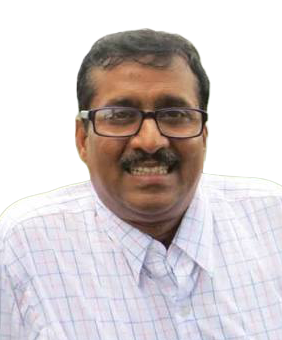
Dr Kishore Dhavala

Coordinator

Dr Kishore Dhavala

Research Agenda

Routes to shared regions

Interdisciplinary by design. Historically grounded. Globally engaged.

Culture Studies

Preserving and interpreting Southeast Asian inscriptions, manuscripts and shared linguistic traditions.

Maritime Linkages

Civilisational links, historical maritime trade routes and the exchange of philosophy across the Bay of Bengal.

Trade & Economy

Trade, investment, supply chains and economic integration between India and ASEAN.

Geopolitics & Strategic Studies

Indo-Pacific dynamics, ASEAN centrality and India's Act East policy through a historical lens.

Publications

Research & insights

Research papers, reports and other scholarly outputs of the Centre will be featured here as they become available.

All publications
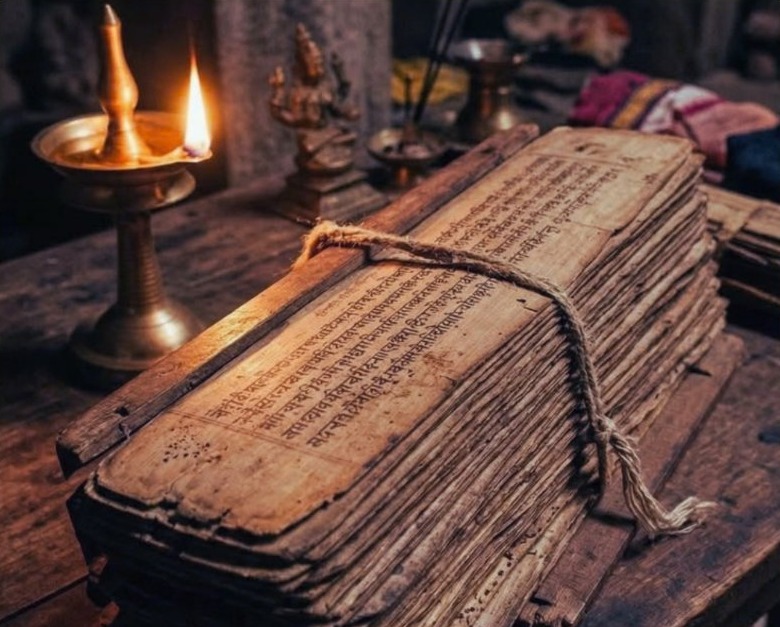
Ancient palm-leaf manuscript bundle beside an oil lamp
  • Working Paper Coming soon…
  • Dissertation Coming soon…
  • Newsletter Coming soon…
  • Policy Brief Coming soon…

Events

Keep the conversation moving

Lectures, symposia and workshops from Nālandā.

Academic calendar
  • Public Lecture

    Coming soon…

  • Symposium

    Coming soon…

  • Workshop

    Coming soon…

Contacts

Open a conversation

Questions about research, fellowships or events? Write to us.

Address

Centre for Southeast Asian Studies
Nālandā University, Rajgir
District Nalanda, Bihar 803116, India

↑